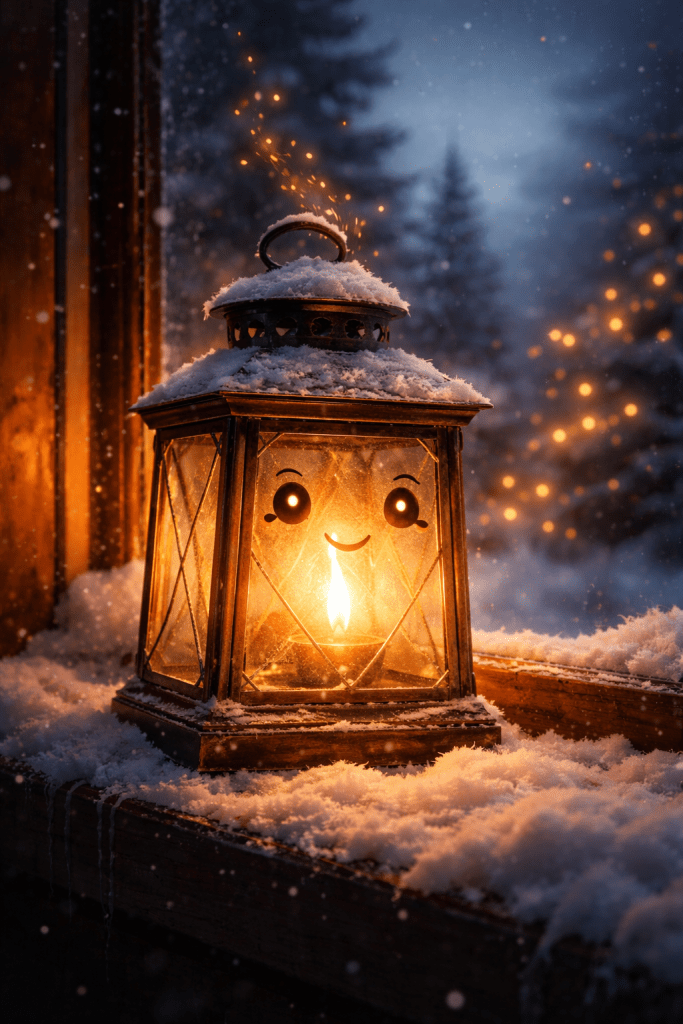
In the last days of the year, when the turning of the sun was very short and the nights stretched like ink, there lived a Lantern who did not yet know it was a Lantern.
It had always been told it was too bright, too strange, too reflective. When storms came, people covered it instead of sheltering beneath it. When the Lantern flickered from exhaustion, they called it faulty rather than weathered. So, the Lantern learned to doubt its own flame.
This was the year of crossings.
The Lantern entered rooms that promised warmth, only to find locked cupboards instead. It spoke carefully; truth wrapped in gentleness, and was told it was imagining the cold. Some keepers dropped the Lantern mid-watch, surprised that glass can crack when mishandled. Others offered keys to doors that did not exist and wondered why hope hurt so much when it shattered.
There was a season when the Lantern burned through sheer will, wick trembling, oil running low. Letters were written not as weapons, but as maps. Not to conquer, but to say, “I was here. This happened. Please look.” The ink carried grief, clarity, and a refusal to disappear politely.
Outside the rooms of power and paper, the world kept ticking. Forms arrived. Decisions delayed themselves like shy guests. Money flowed again in cautious streams. The study was reclaimed, not as proof of worth, but as devotion to curiosity and the hunger for knowledge. The Lantern learned that survival is sometimes an administrative miracle.
Midway through the year, a Mirror appeared. Not the cruel kind that distorts, but a steady one. It said, “You are not broken. You are named.” And with that naming came relief, grief, and a strange quiet joy. The Lantern wept, not because it was finally seen, but because it had always been true.
There were guides along the road. Some young, some learning. Some who stayed. Some who meant well. The Lantern learned that care can be imperfect and still real, and that accountability is not cruelty. It is the growth-and-belonging power wrapped that is the unseen.
By winter’s return, the Lantern stood differently. The flame no longer apologised for its shape. It conserved its oil. It chose where to stand. It understood that light is not performance. It is presence.
By winter’s end, the Lantern learned to stand where it chose. It stopped apologising for its light. It burned truer, not brighter.
And so, the myth ends as all honest myths do, not with triumph, but with continuation, for the Lantern is still here. Its flame is still learning as darkness is no longer mistaken for failure. But rebirth is foreseen!
Elke T.B. Stevens 23/12/25


Leave a Reply